

Summer no longer means just high temperatures. It also means increased stress for crops.
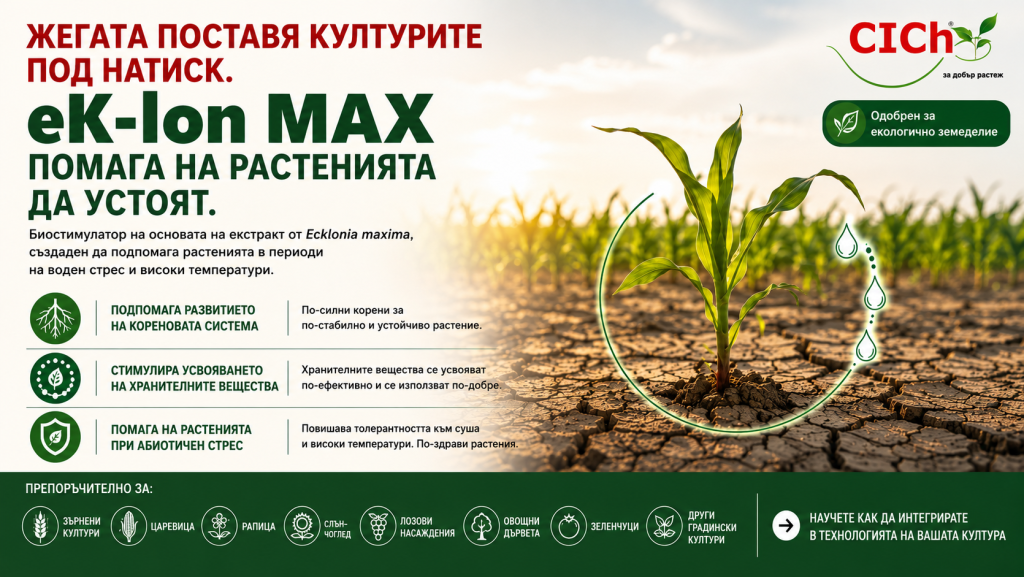
Prolonged periods without rainfall, temperatures above 35°C, and significant day-to-night temperature fluctuations are increasingly affecting crops in Romania. Under these conditions, plants slow their growth, have greater difficulty absorbing water and nutrients, and experience reduced physiological activity.
The effects can become visible in the field through:
- slower vegetative growth;
- reduced root activity;
- smaller fruits;
- yield and quality losses.
In such situations, conventional fertilization alone may not always be enough. Crops can also benefit from products that support the plant’s natural defense mechanisms and help it make better use of available resources.
What is abiotic stress?
Abiotic stress refers to environmental factors that negatively affect plant development but are not caused by diseases or pests.
During the warmer months, the most important stress factors include:
- drought;
- extreme temperatures;
- intense solar radiation;
- salinity;
- sudden temperature fluctuations.
The longer these stressful conditions persist, the more energy the plant directs toward survival rather than growth and production.
Why is it important to act before the plant reaches a critical stress level?
During periods of water stress, plants:
- close their stomata to reduce water loss;
- reduce photosynthetic activity;
- absorb nutrients less efficiently;
- slow down root development.
For this reason, applying a biostimulant before or at the onset of a stressful period can help maintain physiological activity and support faster recovery after episodes of extreme heat.
How does eK-lon MAX work?
eK-lon MAX is a biostimulant based on an extract of the seaweed Ecklonia maxima, obtained through a low-temperature physical process designed to preserve the integrity of its biologically active compounds.
The formulation contains 30% seaweed extract (equivalent to 3% dry matter) and biologically derived carbon.
Its main benefits include:
- supporting uniform root system development;
- stimulating nutrient uptake;
- contributing to increased photosynthetic capacity;
- promoting water and nutrient retention within the plant;
- helping plants cope with abiotic stress;
- supporting recovery after challenging growing conditions.
What makes Ecklonia maxima extract different?
The extract contains naturally occurring compounds such as:
- polysaccharides;
- betaine;
- bioactive molecules;
- compounds with an osmoprotective role.
These compounds contribute to the regulation of water balance and help support physiological processes during challenging growing conditions. The technical data sheet also indicates stimulation of the plant’s natural defense mechanisms and increased tolerance to abiotic stress and certain external stress factors.
Which crops is it recommended for?
According to the product recommendations, eK-lon MAX can be used on:
- grapevines;
- vegetables;
- tomatoes;
- peppers;
- cucumbers;
- melons;
- legumes;
- strawberries;
- blueberries;
- raspberries;
- fruit trees;
- walnut trees;
- other horticultural crops.
How can it be integrated into an effective fertilization strategy?
Biostimulants do not replace fertilization. Their role is to complement the crop nutrition program and help plants make more efficient use of available resources.
Depending on the crop and the technology used, eK-lon MAX can be integrated alongside fertilizers and other technological solutions from the CICh portfolio as part of a strategy tailored to the specific needs of each farm.
CICh is developing a portfolio of technological fertilizers and biostimulants designed to improve nutrient-use efficiency and reduce the impact of stress factors on crops.
As summers become increasingly dry and periods of extreme heat more frequent, abiotic stress management is becoming an important component of crop management strategies.
Biostimulants such as eK-lon MAX can help support plant development during challenging periods by stimulating physiological processes and nutrient uptake. However, application efficiency depends on the crop, soil and climatic conditions, and application timing.
For recommendations on integrating the product into your farm’s crop management program, contact your CICh representative for specialty crops: Florentin Rusu – +40 741 783 542.
Frequently asked questions (FAQ) about fertilization under drought and heat stress
- What is abiotic stress in plants?
Abiotic stress is caused by environmental factors such as drought, high temperatures, salinity, or frost.
- When should eK-lon MAX be applied?
According to the technical recommendations, application timing depends on the crop and growth stage, including before or during periods with a high risk of stress.
- Does eK-lon MAX replace fertilization?
No. It is a biostimulant designed to complement the fertilization program and support more efficient nutrient utilization.
- Which crops is it recommended for?
Grapevines, fruit trees, vegetables, berries, nut crops, and other horticultural crops.
- What does eK-lon MAX contain?
Ecklonia maxima seaweed extract, biologically derived carbon, and bioactive compounds.
- What is its main benefit?
Supporting plant tolerance to abiotic stress and stimulating nutrient uptake as part of a properly managed fertilization strategy.