

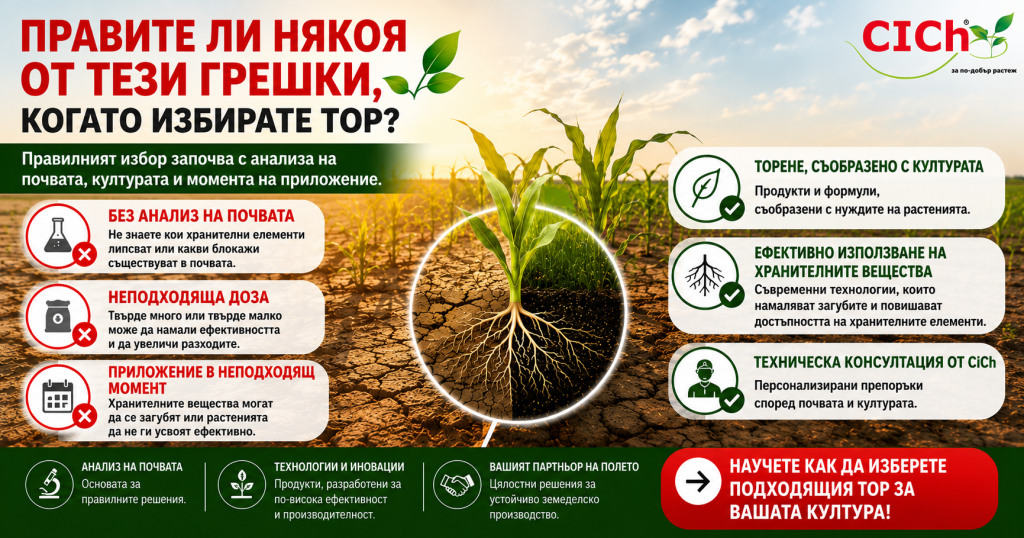
Effective fertilization starts before the fertilizer is applied
Choosing the right fertilizer is one of the most important decisions in crop nutrition. However, successful fertilization depends not only on the product itself but also on how it is integrated into the overall crop management strategy.
Soil analysis, application timing, crop nutrient requirements, and weather conditions all influence how efficiently nutrients are utilized by plants.
Here are five of the most common mistakes that can reduce fertilizer efficiency—and how to avoid them.
- Choosing a fertilizer without a soil analysis
One of the most common mistakes is applying the same fertilizer year after year without understanding the actual nutrient reserves in the soil.
Without a soil analysis, it is difficult to determine:
- Phosphorus availability
- Potassium reserves
- Soil pH
- Organic matter content
- Potential nutrient lock-up
In many cases, the issue is not a lack of fertilizer but the limited availability of nutrients already present in the soil.
Recommendation: Conduct regular soil analyses and adjust your fertilization program based on the results.
- Choosing fertilizer based only on price
The lowest price per tonne does not always represent the best value.
A fertilizer should also be evaluated based on:
- Nutrient form
- Nutrient use efficiency
- Technology incorporated into the product
- Suitability for the specific crop
Under certain field conditions, fertilizers developed with nutrient protection technologies can help improve nutrient availability and utilization.
- Applying fertilizers at the wrong time
Application timing is just as important as product selection.
Applying fertilizer too early may increase nutrient losses, while applying it too late can limit crop development.
Examples include:
- Starter fertilization at planting
- Top-dressing during periods of peak nutrient demand
- Applications before rainfall or under conditions favorable for nutrient uptake
- Using the same fertilizer for every crop
Wheat, maize, sunflower, oilseed rape, and horticultural crops all have different nutritional requirements.
Fertilizer selection should therefore consider:
- Crop species
- Growth stage
- Production objectives
- Soil characteristics
A fertilizer designed for cereal crops may not be the optimal solution for specialty crops, while phosphorus, nitrogen, and potassium requirements vary significantly between crops.
- Ignoring weather conditions
In recent years, drought and high temperatures have become increasingly important factors affecting fertilizer performance.
During periods of water stress:
- Nutrient uptake may decrease.
- Root development may slow down.
- Fertilizer efficiency can be influenced by soil moisture levels.
Under these conditions, technologies that improve nutrient utilization, together with the integration of biostimulants into the crop nutrition program, can provide complementary solutions depending on the crop and local growing conditions.
How do you choose the right fertilizer?
There is no universal fertilizer suitable for every situation.
An effective fertilization strategy should consider:
- Soil analysis
- Crop type
- Yield objectives
- Growth stage
- Weather conditions
- Technical recommendations
A tailored fertilization program can help improve nutrient use efficiency while optimizing fertilizer investment.
Crop performance begins with the decisions made before fertilizers are applied.
Choosing the right product, applying it at the optimal time, and adapting the fertilization strategy to field conditions can make a significant difference in nutrient efficiency.
The CICh portfolio includes technological fertilizers and professional biostimulants developed for different crops and fertilization strategies. Selecting the most suitable solution should be done together with your local CICh technical representative.
For recommendations tailored to your crop, soil type, and production objectives, see Bulgaria contact.